When people across the UK think about reliable, affordable hotels, one name almost always comes to mind. Whether it’s a family heading to Cornwall for a summer break, a couple enjoying a weekend in Edinburgh, or a business traveller staying overnight in Manchester before an early meeting, this well-known hotel chain has become one of the most recognisable names in British hospitality.
Owned by Whitbread, the company has grown from a modest hotel business into the largest hotel brand in the United Kingdom. Today, it operates hundreds of hotels and tens of thousands of rooms across the UK and beyond, serving millions of guests every year.
What makes the company stand out is not luxury or exclusivity. Instead, it has built its reputation on something far more practical and valuable to British travellers — comfort, consistency, convenience, and affordable prices.




At a time when travel costs continue to rise and many people are searching for better value for money, this hotel chain has positioned itself as a trusted choice for both leisure and business travel.
View offer

The Story Behind the Company
The business began in 1987 when Whitbread launched a hotel operation under the name Travel Inn. At the time, the UK budget hotel market was expanding rapidly as more people wanted simple, affordable accommodation without unnecessary extras.
Over the years, the business grew quickly across Britain. In 2004, Whitbread acquired another hotel chain called Premier Lodge, and the two businesses eventually merged to form Premier Travel Inn.
A few years later, the company simplified its branding and adopted the shorter name it is known by today.
That decision proved highly successful.
The new identity was easy to remember and instantly recognisable to customers. More importantly, the company focused heavily on customer experience. Rather than competing with luxury hotels, the business concentrated on delivering dependable quality at reasonable prices.
This strategy helped the company become the UK’s largest hotel chain.
Today, its hotels can be found in city centres, near airports, beside motorways, close to train stations, and in popular holiday destinations throughout the country.
A Brand Built Around British Travellers
One reason this hotel company connects so well with UK customers is because it understands how British people travel.
Not every traveller wants expensive spa treatments or five-star luxury. Most people simply want:
- A comfortable bed
- A clean room
- Reliable service
- Good food nearby
- Free Wi-Fi
- A convenient location
- Fair pricing
The company focuses strongly on these essentials.
For families, the hotels offer practical family rooms and often provide free breakfast deals for children when adults purchase breakfast.
For business travellers, the hotels provide reliable Wi-Fi, quiet rooms, and locations near business districts and transport links.
For couples and tourists, the company offers affordable city-centre accommodation that makes weekend breaks easier and more accessible.
This understanding of ordinary British travellers has helped the brand build enormous customer loyalty.
Hotels Across the UK
One of the company’s greatest strengths is its huge network of hotels.
The business has properties in almost every major UK city including:
- London
- Birmingham
- Manchester
- Liverpool
- Leeds
- Glasgow
- Edinburgh
- Cardiff
- Belfast
- Newcastle
- Bristol
The brand also operates hotels in smaller towns, coastal destinations, airport locations, and motorway service areas.
This nationwide presence means customers often choose the company because they already know what to expect.
If someone has a good experience in Bristol, they are likely to trust the same brand in York, Aberdeen, or Southampton.
That consistency is incredibly valuable in hospitality.
The Hotel Room Experience
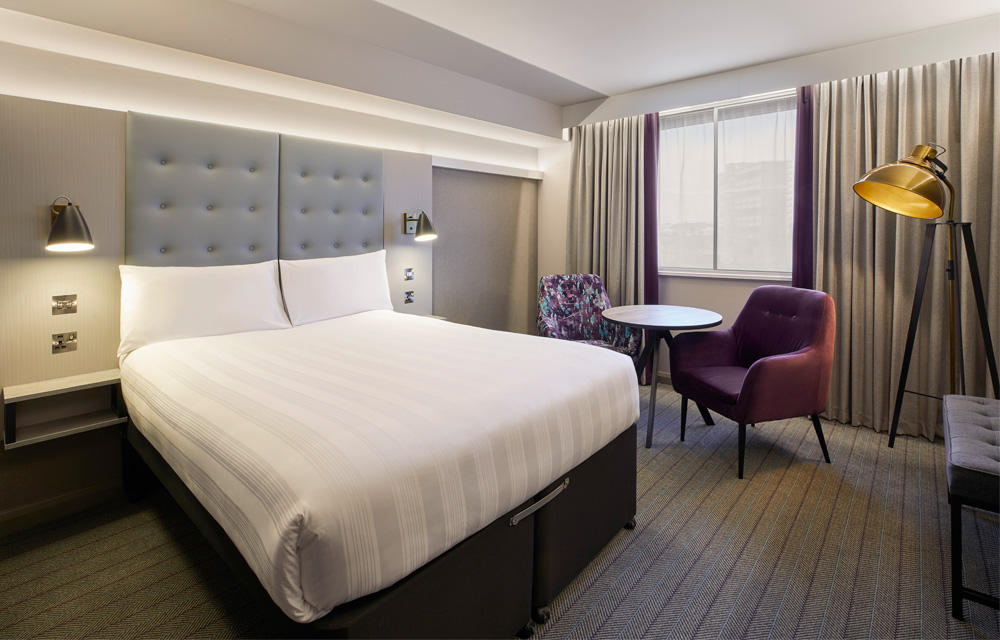
At the heart of the company’s success is the room itself.
The business has invested heavily in creating a sleep experience that feels comfortable and dependable.
Many UK travellers associate the brand with its famous beds and mattresses, which are specifically designed to improve sleep quality.
Typical room features include:
- Comfortable beds
- En-suite bathrooms
- Power showers
- Free Wi-Fi
- Tea and coffee facilities
- TVs with Freeview channels
- Work desks
- Blackout curtains
- Air conditioning in many locations
The rooms are designed to feel modern without becoming overly complicated.
Rather than focusing on luxury decoration, the company prioritises practicality and comfort.
For many guests, especially families and business travellers, this straightforward approach works extremely well.
View offer
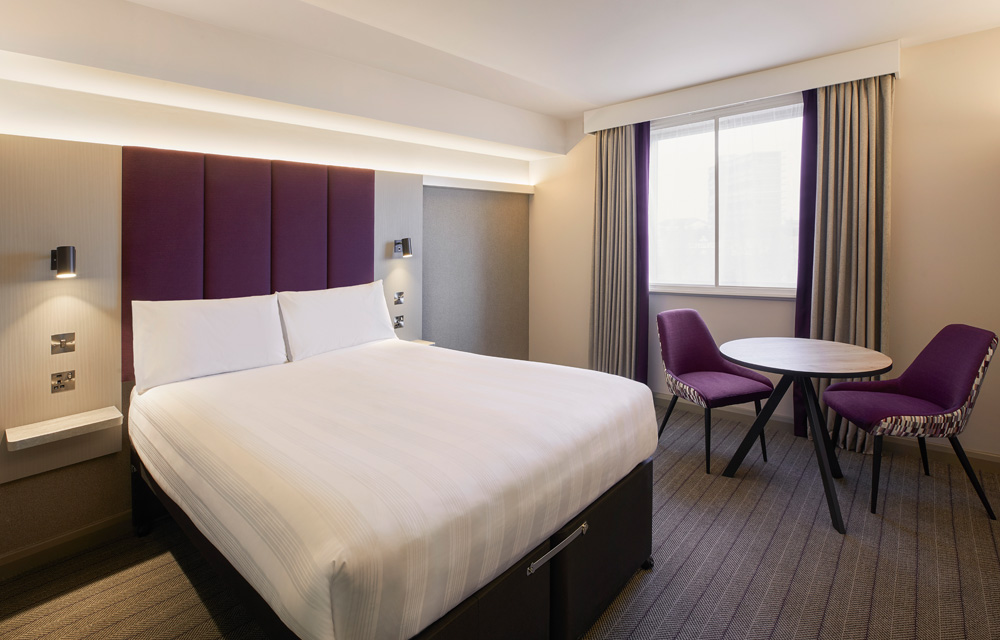
Upgraded Room Options
To appeal to guests looking for a slightly enhanced experience, the company introduced upgraded room categories with extra features such as:
- Enhanced workspace
- More powerful showers
- Mini-fridges
- Coffee machines
- Improved décor
- Upgraded toiletries
These upgraded rooms allow the company to target customers who want extra comfort while still remaining within the affordable hotel category.
This option has become especially popular among professionals travelling for work and couples enjoying short city breaks.
Smart City Hotels
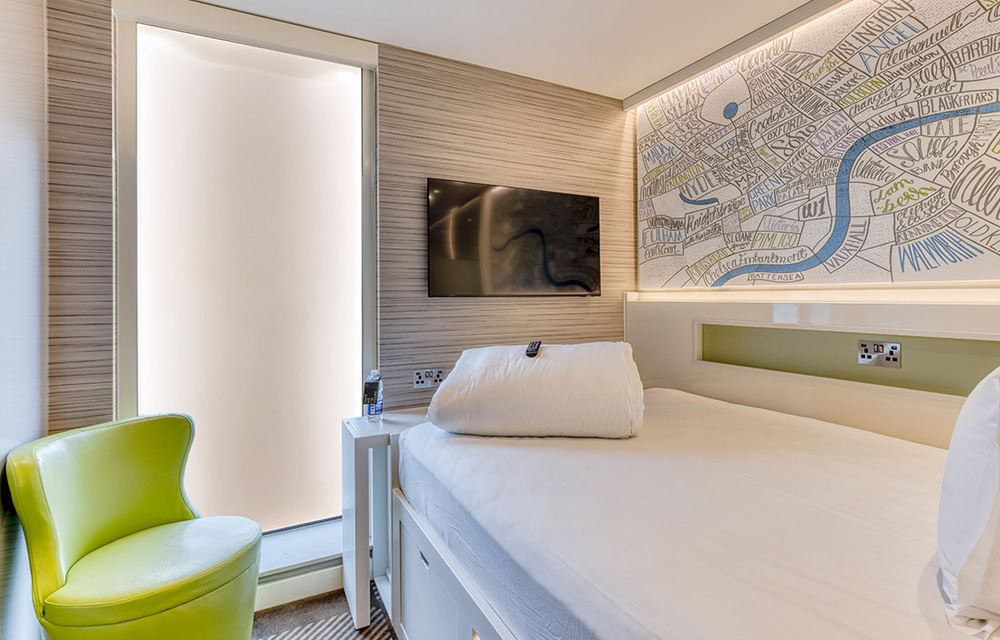
Another important part of the company’s strategy is its compact city-centre hotel concept.
These hotels are designed mainly for busy urban areas like London and Edinburgh.
The rooms are smaller but highly efficient, featuring smart technology and modern design.
Features often include:
- Touchscreen room controls
- Smart TVs
- Adjustable lighting
- Compact layouts
- High-powered showers
- Fast Wi-Fi
The idea behind this concept is simple.
Many people visiting major cities spend most of their time exploring, working, or socialising outside the hotel. They do not necessarily need a large room, but they still want comfort, cleanliness, and a central location.
These smart city hotels provide exactly that.
They are especially popular among younger travellers, solo visitors, and professionals staying in central London.

Budget-Friendly Concepts
The company has also experimented with even more affordable hotel formats.
These locations focus on ultra-budget accommodation while still maintaining basic quality standards.
Rooms are smaller and more minimalistic, but they still provide:
- Comfortable beds
- Clean facilities
- Air conditioning
- Wi-Fi access
- Modern design
This concept allows the business to compete more directly with low-cost hotel brands while maintaining its reputation for reliability.
View offer
Food and Breakfast Options
Food has traditionally been an important part of the hotel experience.
Many properties are connected to restaurant brands such as:
- Beefeater
- Brewers Fayre
- Bar + Block
- Thyme
Breakfast is one of the company’s strongest selling points.
The breakfasts are particularly popular with British families because they offer unlimited cooked breakfast options alongside continental choices.
Typical breakfast items include:
- Bacon
- Sausages
- Eggs
- Hash browns
- Beans
- Toast
- Pastries
- Fruit
- Cereals
- Coffee and tea
The family-friendly breakfast deals have helped strengthen the company’s appeal among parents travelling with children.
Why Business Travellers Choose the Brand
The company has become a major player in the UK business travel market.
Thousands of professionals stay in these hotels every night because the business offers:
- Predictable quality
- Convenient locations
- Fast booking systems
- Business-friendly facilities
- Flexible pricing
- Reliable Wi-Fi
The company also benefits from having hotels near:
- Airports
- Exhibition centres
- Business parks
- Railway stations
- City centres
For employers trying to control travel costs while still offering employees comfortable accommodation, the chain represents a practical middle ground.
Technology and Online Booking
The company has invested heavily in digital services.
Its website and mobile booking systems allow customers to:
- Search hotels quickly
- Compare prices
- Choose room types
- Manage bookings
- Check in online
- Access special offers
This convenience is extremely important in modern travel.
British consumers increasingly expect smooth online experiences, and the company has worked hard to keep its systems simple and user-friendly.
The business also uses dynamic pricing, where room costs change depending on demand, location, and booking timing.
This allows customers to find cheaper deals when booking early.
Famous Advertising Campaigns
The hotel chain became famous for its long-running advertising campaigns featuring comedian and actor Lenny Henry.
For many years, Henry served as the face of the brand and became strongly associated with the company’s friendly and reassuring image.
His adverts helped position the business as:
- Trustworthy
- Warm
- Dependable
- British
- Family-friendly
These campaigns played a major role in making the hotel chain a household name across the UK.
The Good Night Guarantee
One of the company’s best-known promises is its sleep guarantee.
The concept is simple.
If guests are unhappy with their sleep experience, the company may offer a refund or compensation.
This guarantee reflects the brand’s core message:
A good night’s sleep matters.
By focusing heavily on sleep quality rather than unnecessary luxury, the company has created a strong and memorable identity.
Sustainability and Social Responsibility
Like many modern hospitality businesses, the company has increased its focus on sustainability.
The business has introduced various environmental initiatives including:
- Improved energy efficiency
- Reduced food waste
- Electric vehicle charging points
- Water-saving systems
- Sustainable sourcing policies
Whitbread, the parent company, has also promoted wider environmental and social goals through its “Force for Good” strategy.
As environmental awareness continues growing in the UK, these efforts are becoming increasingly important for customers.
Many travellers now prefer businesses that demonstrate social responsibility and environmental awareness.
View offer
Challenges Facing the Company
Despite its success, the business also faces significant challenges.
The UK hospitality sector has experienced major disruption in recent years due to:
- Inflation
- Rising energy costs
- Labour shortages
- Increased operating expenses
- Economic uncertainty
- Changes in travel habits
Competition is also intense.
The company competes directly with brands such as:
- Travelodge
- Holiday Inn Express
- Ibis
- Independent hotels
- Airbnb
To stay competitive, the company must continue balancing affordability with quality.
Customers expect low prices, but they also expect clean, modern hotels with excellent service.
Maintaining those standards across hundreds of locations is a huge operational challenge.
Expansion Beyond the UK
Although the company remains strongly associated with Britain, it has also expanded internationally.
Germany has become a particularly important growth market.
Whitbread sees Germany as a major opportunity because the budget hotel market there is still developing compared with the UK.
The company has opened multiple hotels across German cities and continues investing heavily in expansion.
The business has also operated in other international markets over the years, although the UK remains its primary focus.
Why the Brand Remains Popular
There are many reasons why this hotel company continues to succeed in Britain.
First, the brand delivers consistency.
Customers know roughly what they are going to receive wherever they stay.
Second, the company understands value.
In difficult economic times, many people cannot justify expensive luxury hotels. This chain provides a more affordable alternative without feeling cheap or unreliable.
Third, the company has built trust.
Millions of British travellers have stayed in these hotels over the years, creating strong brand recognition and customer confidence.
Finally, the company adapts.
From compact city hotels to upgraded room options, the business continues evolving to meet changing customer expectations.
The Future of the Company
Looking ahead, the business is expected to remain one of the dominant names in UK hospitality.
The company continues investing in:
- New hotels
- Room upgrades
- Digital services
- Sustainability initiatives
- International growth
As travel demand continues recovering and changing, the business is likely to focus even more on flexibility, convenience, and affordability.
The company’s challenge will be maintaining the balance between low prices and high customer expectations.
However, its strong reputation, nationwide presence, and customer loyalty place it in a powerful position.
Final Thoughts
This hotel company has become far more than simply a budget accommodation chain.
For millions of people across the UK, it represents reliability, comfort, and value for money.
Whether someone is travelling for business, taking a family holiday, attending a concert, visiting relatives, or exploring a new city, the brand has established itself as a familiar and dependable option.
Its success has not been built on luxury or glamour.
Instead, the company has focused on understanding what ordinary travellers genuinely need — a clean room, a comfortable bed, friendly service, and a good night’s sleep.
That simple formula has helped the business become one of the most successful hospitality brands in Britain.
And as long as British travellers continue valuing comfort, convenience, and affordability, the company is likely to remain a major part of the UK travel landscape for many years to come.